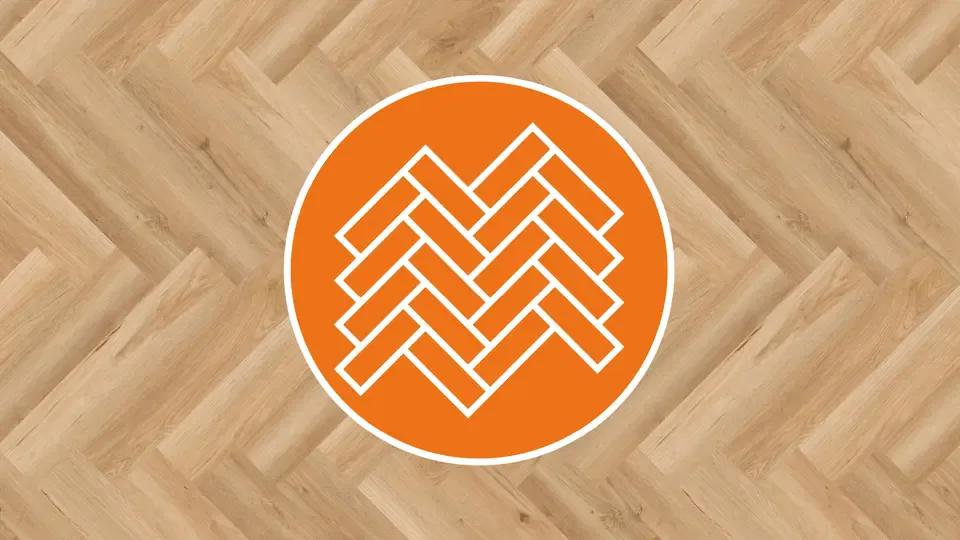
VINCORE · HERRINGBONE
Classic herringbone and French herringbone
| Characteristic | Classic herringbone | French herringbone |
|---|---|---|
| Board shape | Rectangle | Parallelogram - ends cut at an angle |
| Connection | The end of the board meets the side of the adjacent board | The ends of the boards meet on one line |
| Visual effect | Stepped, interlocked pattern | Clear, continuous arrow-shaped stripes |
| VinCore offer | HERRINGBONE and HERRINGBONE+, 125 × 625 mm, boards A and B | Not available |
Source: VinCore catalog.
The most important differences at a glance
- The shape of the board - in the classic herringbone it is a rectangle, in the French herringbone it is a parallelogram with obliquely cut ends.
- Connection - in the classic version, the end of the board meets the side of the adjacent one, in the French version, the ends of the boards meet on one axis.
- Effect - classic gives an interlocked, stepped pattern; the French one creates clear, continuous stripes.
- Nomenclature - French herringbone is also called chevron, and classic herringbone.
- VinCore offer - classic herringbone in the 125 × 625 mm format, in the HERRINGBONE and HERRINGBONE+ collections.
Classic herringbone and French herringbone - layout diagram and the most important differences
Classic herringbone - a pattern with an interlocking rhythm
Classic herringbone, also known as herringbone, is made of rectangular boards joined at right angles. Each board has its end adjacent to the side of the adjacent one, which is why the pattern has a characteristic, stepped pattern, reminiscent of fish bones, from which the English name comes.
This arrangement is well known from traditional parquet floors. In vinyl floors, it is recreated using short boards in two variants. In the VinCore collections, these are A and B boards, of which there are the same number in each package. They are arranged alternately to create a pattern.
Features of the classic herringbone pattern
- rectangular boards, without diagonal cuts at the ends,
- interlocked pattern, with a clear rhythm,
- a more subtle, more traditional effect than in French herringbone,
- works well in both classic and contemporary interiors.
French herringbone - continuous arrow pattern
French herringbone, also called chevron, is made of boards whose ends are cut at an angle. Thanks to this, the ends of adjacent boards meet on one line, and the floor creates continuous V-shaped strips. The pattern is more geometric and orderly than in the classic herringbone, and its axes clearly lead the eye into the room.
Features of French herringbone
- parallelogram-shaped boards with obliquely cut ends,
- a pattern of continuous arrow-shaped stripes,
- a more geometric, expressive effect,
- clear pattern axes that strongly influence the perception of interior proportions.
How to choose a pattern for the interior?
Arrangement style
Classic herringbone is best suited to interiors where the floor is to refer to tradition: classic, modern classic or tenement house stylings. It also fits well into modern interiors, where it is a decorative, but not dominant element. French herringbone gives a more geometric and expressive effect, which is why it is more often chosen where the floor is to be the main accent of the arrangement.
The size and shape of the room
Both patterns have a direction that affects the perception of proportions. In French herringbone, continuous stripes strongly guide the eye along the axis of the pattern. In classical herringbone, the interlocking rhythm is more delicate and the pattern imposes less direction. In smaller rooms, it is worth choosing a light decor and subdued rest of the arrangement so that the pattern does not overwhelm the interior.
Installation
Each herringbone requires more careful planning than a board. Before starting the assembly, you need to select a pattern and plan the floor in the room so that the axis of the pattern is well located in relation to the doors, windows or the main axis of the interior.
When the decision is between herringbone and classic plank, it will be helpful to compare both vinyl floor layouts in terms of effect, interior proportions and installation.
Classic herringbone in VinCore vinyl floors
VinCore offers classic herringbone in two collections. Both have a 125 × 625 mm format, delicate wood structure, matte finish, waterproof, hard core and integrated IXPE foam backing. The boards are connected using the Unidrop X click system.
- HERRINGBONE - thickness 5 mm, wear layer 0.30 mm, utility class 23/31, 20-year warranty for intensive home use; a pack of 12 pieces, i.e. 0.94 m²,
- HERRINGBONE+ - thickness 6 mm, wear layer 0.55 mm, utility class 23/33, 25-year warranty for intensive home use; pack of 16 pieces, i.e. 1.25 m².
The HERRINGBONE collection includes four classic oak decors and one modern ash decor, inspired by the landscapes and architecture of French cities and regions. The HERRINGBONE+ collection, thanks to its thicker wear layer, is intended for both residential interiors and commercial spaces with high traffic.
VinCore herringbone decors
VINCORE · HERRINGBONE DECORS
VinCore classic herringbone decors
| Decor | Collection | Shade according to manufacturer |
|---|---|---|
| STRASBOURG | HERRINGBONE | Ash; light, cool, grey-white, wavy grain |
| NORMANDY | HERRINGBONE | Light, sandy brown; calm grain |
| PROVENCE | HERRINGBONE | Light, honey beige with a golden tone |
| BRITTANY | HERRINGBONE | Warm, nutty brown; calm grain |
| CORSICA | HERRINGBONE | Warm browns with knots; rustic character |
| LILLE | HERRINGBONE+ | Light blonde with a powdery tone; the brightest in the collection |
| GRENOBLE | HERRINGBONE+ | Warm, sandy-beige; clear grain |
| NICE | HERRINGBONE+ | Subdued, olive-gray; cooler |
| LYON | HERRINGBONE+ | Warm, honey-brown with darker streaks |
| PARIS | HERRINGBONE+ | Deep, grey-brown; dense grain |
Source: VinCore 2026 catalog.
STRASBOURG, NORMANDY and LILLE decors are suitable for bright, Scandinavian and minimalist interiors. BRITTANY suits classic and modern classic arrangements, and CORSICA and PROVENCE suit rustic and Provencal interiors. NICE and PARIS decors will also work well in modern and industrial interiors.
How to choose a herringbone decor?
In herringbone, the pattern is created by the arrangement of the boards themselves, so the nature of the grain is particularly important. Decors with a calm, uniform grain, such as NORMANDY, BRITTANY or LILLE, emphasize the geometry of the pattern and create a subdued, elegant effect. Decors with a distinct grain, knots or abrasions, such as CORSICA, GRENOBLE or LYON, give the floor a more lively, natural character and the herringbone pattern becomes less geometric.
It is worth choosing the shade depending on the size and lighting of the room. Bright decors such as STRASBOURG, NORMANDY or LILLE visually enlarge the interior. Deeper tones, such as PARIS, work better in larger, well-lit spaces and interiors with a distinctive character.
Herringbone in individual rooms
- Living room - herringbone becomes the main decorative element of the interior; in an open living area, it is worth placing it throughout the entire space.
- Hall and hall - creates an impressive first impression; due to heavy traffic, it is worth choosing HERRINGBONE+ with a 0.55 mm wear layer.
- Bedroom - works well in a bright, calm decor that does not overwhelm the interior.
- Kitchen and bathroom - the waterproof, hard core allows the pattern to continue in these rooms as well.
- Commercial spaces - in boutiques, cafes or offices with high traffic, it is worth choosing HERRINGBONE+ with class 33.
Board format and pattern effect
VinCore herringbone boards have dimensions of 125 × 625 mm, which is five times the length of the width. Short, narrow boards create a dense, fine pattern that works well in both large and medium-sized rooms. The board formats also differ in the contents of the package: the HERRINGBONE package contains 12 pieces (0.94 m²), and the HERRINGBONE+ 16 pieces (1.25 m²).
How to arrange the classic VinCore herringbone pattern?
Installing the herringbone is moderately difficult and requires very accurate and precise joining of the boards. The long edges are joined at an angle and the short edges are tapped with a rubber hammer. Improper connection of panels may result in rejection of the complaint.
The two most popular herringbone patterns are classic and basket. The assembly of the classic pattern is as follows:
- Main line - it is marked through the center of the room; it is a reference point for the entire pattern.
- Starter sets - each consists of 3 A boards and 3 B boards, which after cutting form a triangle. Their number depends on the width of the room.
- First row - sets are connected, starting from the left with board A.
- Second row - starts from the right side with board B; subsequent rows are arranged alternately.
- Gap at the walls - 6 mm around the entire perimeter of the room.
The remaining rules are the same as for boards: acclimatization of the panels for at least 24 hours, flat substrate with a tolerance of 2 mm per 1 m and 1 mm per 20 cm, expansion joints around permanent elements and installation only inside buildings. Due to the precision required for herringbone, it is worth entrusting the installation to certified installers.
Herringbone in the kitchen, bathroom and underfloor heating
HERRINGBONE and HERRINGBONE+ collections have a waterproof, hard core, so the herringbone pattern can be laid also in the kitchen and bathroom. In wet areas, gaps near the bathtub, shower and under finishing profiles are filled with MS or PU sealing compound. VinCore herringbone can also be laid on water and electric underfloor heating, with a floor surface temperature of up to 27°C and a gradual temperature change.
The most common mistakes when choosing a herringbone pattern
- Choosing a pattern without a plan - a poorly placed main line makes the pattern asymmetrical in relation to the doors or windows.
- Too dark a decor in a small room - a distinctive pattern in a dark shade can visually make the interior smaller.
- Self-assembly without experience - herringbone requires precision, and improper connection may result in rejection of the complaint.
- Underestimating the material - the herringbone arrangement involves more cuts near the walls.
- Choosing the decor based only on the photo - it is worth assessing the pattern drawing and shade in person in the showroom.
Frequently asked questions
What is the difference between French herringbone and classic herringbone?
In classic herringbone, rectangular boards are joined at right angles, and the end of the board meets the side of the adjacent board. In French herringbone, the ends of the boards are cut at an angle and meet on one line, creating continuous arrow-shaped strips.
Does VinCore offer French herringbone?
NO. The HERRINGBONE and HERRINGBONE+ collections are classic herringbone in the 125 × 625 mm format.
What are A and B boards?
These are two variants of boards needed to lay a classic herringbone pattern. Each VinCore package contains the same number of them, and they are arranged alternately.
Can you lay herringbone from vinyl panels yourself?
It is possible, but assembly is moderately difficult and requires high precision. It is worth entrusting the installation to certified installers.
Which herringbone collection should you choose?
HERRINGBONE will work well in most residential interiors. HERRINGBONE+ with a 0.55 mm wearing layer and class 33 is worth choosing for high-traffic areas and commercial facilities.
Summary
- classic herringbone consists of rectangular boards joined at right angles and creates an interlocked, traditional pattern,
- French herringbone is made of boards with obliquely cut ends and creates continuous arrow-shaped strips,
- VinCore offers classic herringbone in the HERRINGBONE and HERRINGBONE+ collections, with A and B boards in the 125 × 625 mm format,
- Herringbone installation is moderately difficult and requires setting the main line and high precision.
The full offer of VinCore vinyl floors is available on the brand's website, and the catalog, installation instructions and warranty cards are available in the Downloads tab. You can check the sales points in the Find a store search engine.
Looking for the perfect floor?
Discover our full range of vinyl flooring and find the ideal solution for your interior.
Want to see our articles more often in Google?
Add VinCore as a preferred source in Google Search so our guides and inspiration appear more often for you.
Add in Google