When choosing a vinyl floor, the most important thing is the decor. However, what the floor will look like after years of use is determined by technical parameters, which are not always obvious. The wear layer of vinyl panels, utility class and abrasion resistance are concepts that appear in every technical data sheet. Knowing them allows you to choose the floor according to the actual load in the room.
Construction of a vinyl panel
To understand the meaning of individual parameters, it is worth knowing the structure of the panel. VinCore vinyl flooring consists of several layers, counting from the top:
- polyurethane coating - scratch-resistant matte finish
- wear layer - a transparent layer protecting the decor
- decorative foil - high-resolution print imitating wood
- SPC core - composite supporting layer of stone and polymers with a click system
- integrated underlay - IXPE foam
Wearing layer - the most important durability parameter
The wear layer is the transparent layer lying directly above the decor. It takes on everyday stresses: friction, movement, sand brought on shoes or moving furniture. The thicker it is, the longer the decor remains intact and the floor retains its original appearance.
The thickness of the wearing course is given in millimeters. VinCore offers two variants:
- 0.30 mm - WOOD and HERRINGBONE collections
- 0.55 mm - WOOD+ and HERRINGBONE+ collections
Wearing layer and total thickness
The total thickness of the panel and the thickness of the wearing course are two different parameters. The total thickness (5 or 6 mm in VinCore collections) includes all layers, including the core and backing, and primarily affects the panel's stiffness and walking comfort. The abrasion resistance is determined solely by the abrasion layer. Therefore, when comparing floors in terms of durability, it is worth checking this parameter.
Usability class - for which rooms?
The usability class according to EN ISO 10874 determines the amount of traffic the floor is intended for. It is marked with two numbers: the first indicates the type of use, and the second indicates the intensity of use.
- classes 21-23 - residential applications, from moderate (21) to intensive (23) use
- classes 31-34 - commercial applications, from moderate (31) to very intensive (34) use
- classes 41-43 - light industrial applications
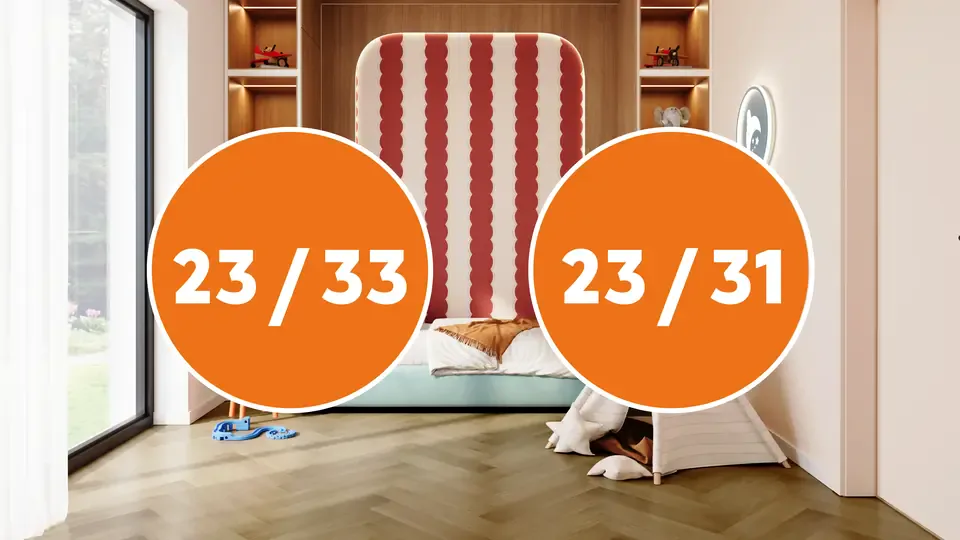
Flooring is often assigned two grades, such as residential and commercial. All collections in the VinCore offer are class 23, i.e. intensive home use. For commercial use, the WOOD and HERRINGBONE collections are rated 31 (moderate commercial use) and the WOOD+ and HERRINGBONE+ collections are rated 33 (heavy commercial use).
How to choose a classroom for a room?
Class 23 is suitable for all living spaces, including the hall, kitchen and open living area. Class 31 covers commercial spaces with low traffic, such as offices and small offices. Class 33 is intended for facilities with intense traffic, such as offices, shops, service premises and hotels.
Abrasion resistance - AC3 and AC4
The technical data sheet of VinCore floors also includes the result of the abrasion resistance test according to EN 13329. The WOOD and HERRINGBONE collections meet the requirements of class AC3 (≥ 1600 cycles), and the WOOD+ and HERRINGBONE+ class AC4 (≥ 4000 cycles). The number of cycles indicates the surface's resistance to abrasion in a standardized test: the higher it is, the slower the wear progresses.
Other parameters worth attention
The wearing layer and usability class are the most important, but not the only, parameters that indicate durability. In the technical data sheet it is also worth paying attention to:
- resistance to furniture wheels (EN 425) - VinCore floors have passed 25,000 cycles with W-type wheels without noticeable changes
- residual dent (EN 434) - result ≤ 0.2 mm, important for heavy furniture
- stain resistance (EN 438) - class 5 for substance groups 1 and 2 and class 4 for group 3
- resistance to UV rays (ISO 105-B02) - score ≥ 6, which reduces the risk of fading in large glazing
- dimensional stability (EN 23999) - ≤ 0.15% when the standard requires ≤ 0.25%
- anti-slip - R10 (DIN 51130) and DS (EN 13893)
- reaction to fire (EN 13501-1) - class Bfl-s1
Parameters and warranty
The performance parameters translate directly into the scope of the warranty. The WOOD and HERRINGBONE collections are covered by a warranty of 20 years for intensive domestic use and 10 years for moderate commercial use. The WOOD+ and HERRINGBONE+ collections have a warranty of 25 years for intensive domestic use and 10 years for intensive commercial use. Detailed conditions are specified in the warranty cards.
How to read the technical data sheet before purchasing?
- It is worth comparing the traffic intensity in the room with the usability class
- The thickness of the wearing course is more important for durability than the overall thickness of the panel
- The test standards given in the results allow you to compare products from different manufacturers
- Additional parameters should be selected according to the application, for example resistance to wheels in the office or anti-slip properties in the bathroom
- Warranty conditions should be checked for the intended type of use
Frequently asked questions
Is a 0.30 mm wearing layer enough for a house?
Yes. The WOOD and HERRINGBONE collections with a 0.30 mm layer are class 23, i.e. intended for intensive home use. The 0.55 mm layer provides additional durability in rooms with the highest traffic intensity and in commercial facilities.
What is the difference between class 23 and class 33?
Class 23 is for intensive use in residential premises and Class 33 is for intensive use in commercial premises such as offices, shops or hotels.
Is a thicker panel always more resistant?
Not always. Abrasion resistance depends primarily on the thickness of the wearing layer, and not on the total thickness of the panel.
Summary
The wearing layer and the usability class are the two parameters that largely determine the durability of a vinyl floor. A 0.30 mm layer with class 23/31 works well in residential rooms and facilities with moderate traffic. The 0.55 mm layer with class 23/33 is intended for areas with the highest traffic intensity and intensively used commercial facilities. It is complemented by additional parameters, such as resistance to wheels, dents and UV rays, which are worth checking in the technical data sheet before purchasing.
Looking for the perfect floor?
Discover our full range of vinyl flooring and find the ideal solution for your interior.
Want to see our articles more often in Google?
Add VinCore as a preferred source in Google Search so our guides and inspiration appear more often for you.
Add in Google